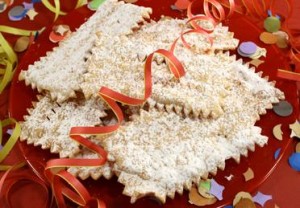
A pretzel is known by different names in other countries. In Germany, pretzels are called Brezel, in Polish it is known as Precel, the Norwegian and the Danish people call it Kringle, and the French, Spanish, and the Italians call it Pretzel, Bretzel, or Brezel. In Italy, the Taralli is an Italian snack food that is similar in texture to a pretzel. Taralli can either be sweet or savory. Sometimes they are glazed with sugar, may be flavored with onion, garlic, seeds, pepper, fennel, or just salt. The sweet and plain Taralli are often dunked in wine. The Taralli shapes are classically formed into small rings or ovals. They are baked, or deep fried.
Americans consume an average of 1.5 pounds of pretzels per year, supporting an industry that has an annual value of over $550 million, according to National Day Calendar.

Free Pretzels on National Pretzel Day:
Auntie Anne’s: If you have the My Pretzel Perks app, you can get a free Original or Cinnamon Sugar Pretzel between April 26 and May 1. Plus, if you download the app by April 25, you could be one of five people who will win free pretzels for a year.
Ben’s Soft Pretzels: Donate $1 or more to the Intrepid Fallen Heroes Fund and get a free Jumbo Soft Pretzel. All proceeds go to the Intrepid Fallen Heroes Fund.
Philly Pretzel Factory: Receive a free pretzel on April 26 at most locations. This offer might not be valid at locations in aquariums, zoos, airports or train stations.

Most people agree that the pretzels were invented by monks and have a Christian background. According to history, in 610 AD, an Italian monk invented pretzels as a reward to children who learn their prayers. He called the strips of baked dough, “pretiola” (little rewards) these strips of baked dough were folded to resemble arms crossing the chest. However, there is no source cited to back up these details. Another source locates the invention in a monastery in southern France. In Germany there are stories that pretzels were the invention of their bakers. In Greece, ringed bread, derived from communion bread used in monasteries a thousand years ago, may also be related to the invention of the looped pretzel.
Within the Catholic Church, pretzels were regarded as having religious significance for both ingredients and shape. Pretzels made with a simple recipe using only flour and water could be eaten during Lent, when Christians were forbidden to eat eggs, lard, or dairy products such as milk and butter. As time passed, pretzels became associated with both Lent and Easter.

In the 19th centuries, southern German and Swiss German immigrants introduced the pretzel to North America. These immigrants became known as the Pennsylvania Dutch. Many handmade pretzel bakeries populated the central Pennsylvania countryside, and the pretzel‘s popularity spread. In the 20th centuries, soft pretzels became extremely popular in other regions of the United States. Cities like Philadelphia, Chicago, and New York became famous for their soft pretzels. With increased popularity due to mass production, pretzels were distributed at schools, grocery stores, movie theaters, sports stadiums, arenas, and street vendors. Selling pretzels on street corners in wooden glass enclosed cases were found in New York City.


Today, Pennsylvania is the center of the American pretzel production for the hard crispy and the soft bread types of pretzels. Pennsylvania with its large German background produces 80% of the nation’s pretzels. In 1963 the largest pretzel of it’s time weighing 40 pounds and measuring 5 feet across was baked by Joseph Nacchio of the Federal Pretzel Baking Company. In 1993 the Pretzel Museum opened in Philadelphia, operated by the Nacchio family.
My recipe this week is called “Honey Butter Homemade Soft Pretzels” I have made these before and I usually have my family knocking on my door, for more. The soft dough is so light and the honey butter melted on the top of each pretzel reminds me that I’m back on the corner of 5 Th Ave, reliving my childhood all over again. Memories never tasted so good. So enjoy, whether you like the sticks, chocolate covered or the big soft ones with mustard on top, celebrate pretzels with a bag today.
“Honey Butter Homemade Soft Pretzels”
Total Time: 1 hr 55 minutes
Prep: 25 minutes
Yield: 4 to 6 servings

2 tablespoons yeast
2 cups of warm water
6 cups all-purpose unbleached flour
1 tablespoon of salt
2 tablespoons of sugar
1/4 cup of honey
3 eggs beaten
Honey Butter Mix (recipe follows)
Kosher salt, for sprinkling
“Honey Butter Mix”
1/2 cup of melted butter
1/4 cup of honey
In a small bowl combine melted butter and honey
Directions:
Preheat oven to 425 °F degrees. In a large bowl, combine the yeast and warm water; allow to sit for 5 minutes till somewhat foamy. Add the flour, salt, sugar, honey and eggs. Mix thoroughly for about 10 minutes. Let the dough rise about 10 to 15 minutes. Divide the dough into 4-ounce portions and roll out each piece into a long rope shape. Now shape the pretzel dough and pinch the 2 (arms) to maintain them from coming apart. Place on greased cookie sheet or you can use parchment paper and let rise for 1 hour. Brush with Honey Butter Mix and sprinkle with kosher salt. Bake for 20 minutes till light brown. Remove to cool for 5 minutes prior to eating; if you like them warm just a few minutes.
********************************************

Tip Tuesday: Salt
Did you know? Ancient Romans seasoned vegetables with salt, which is where the word “salad” originates.
Think outside the salt shaker! Salt is a versatile household powerhouse—here's how to use it to clean your kitchen, preserve your produce, and even soothe common aches and pains.
1. Brighten a wooden cutting board: Sprinkle salt over the cutting board and scour it using half a lemon. Rinse the salt and lemon juice off with water and let the board dry.

3. Soothe a sore throat: Dissolve 1/2 teaspoon of salt in an 8 oz glass of water to temporarily relieve throat pain.
4. Set the color of new clothes and towels: Add a tablespoon of salt to the wash to help seal in the fabric color.
5. Relieve bee sting pain: Mix salt and water into a paste and apply to the bee sting immediately. Leave the paste on for 30 minutes.
6. Make milk last longer: Add a pinch of salt to your milk carton to make it last a few days longer.
7. Clean wicker furniture: Scrub your outdoor furniture with a stiff brush dipped in salt water to get rid of any dullness. Let the furniture dry in the sun.
8. Stop candles from dripping: Make a saltwater solution of 2 tablespoons of salt for every 2 cups of water. Soak your candles overnight and then set them out to dry.

10. Prevent windows from frosting: Dip a sponge in salty water and rub on the inside of your windows. This will stop any ice from forming.
11. Stop apples from browning: Mix a 1/2 teaspoon of salt for every 1 quart of water and soak the apple pieces for about 5 minutes.
Till Next Time…..
Copyright © 2016 “Family Plus Food Equals Love” All Rights Reserved